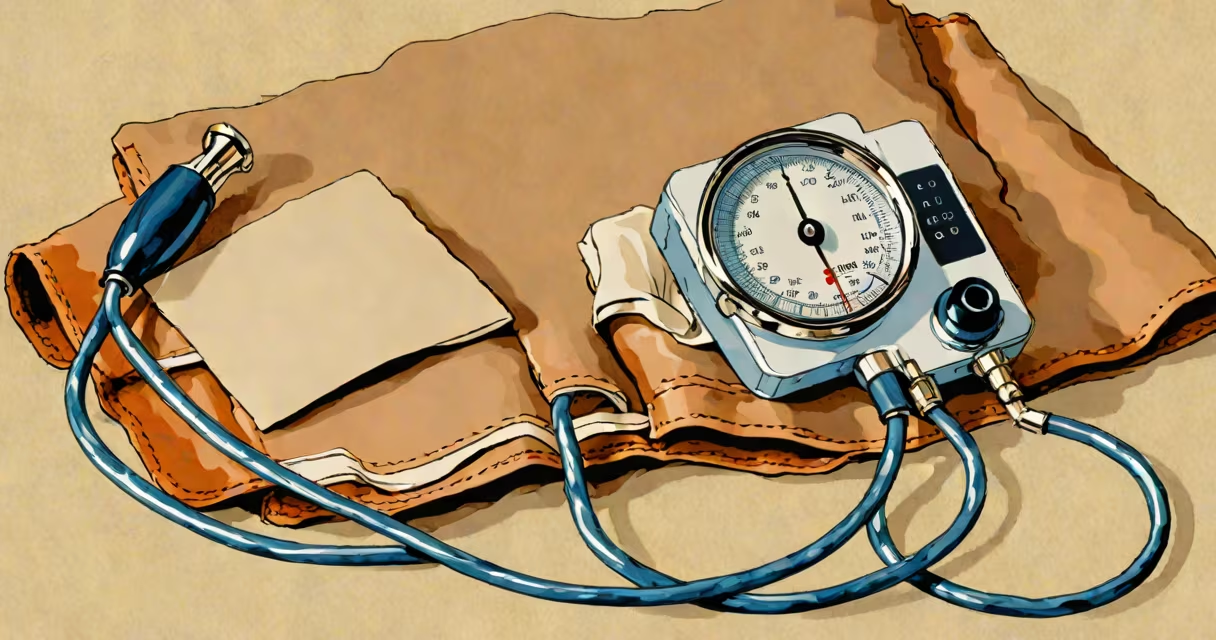
An ambulatory blood pressure monitor is a wearable device that measures blood pressure automatically at regular intervals over a 24-hour period, providing a detailed picture of blood pressure fluctuations throughout daily activities and sleep.
This device captures readings while the person performs normal routines-working, exercising, sleeping, eating-offering insights that single office measurements cannot. Unlike standard sphygmomanometers, which record only one reading at a moment in time, the ambulatory monitor detects patterns such as nocturnal dipping, white-coat hypertension, and masked hypertension.
According to the American Heart Association, ambulatory monitoring is recommended for confirming hypertension diagnoses, especially when office readings are inconsistent or elevated. The U.S. National Institutes of Health notes that ambulatory monitoring improves detection of true hypertension by reducing false positives linked to anxiety in clinical settings.
The monitor consists of a small digital unit worn on a belt or shoulder strap and a blood pressure cuff attached to the upper arm. The cuff inflates periodically-typically every 15 to 30 minutes during waking hours and every 30 to 60 minutes at night-to take automated readings.
Patients are instructed to carry out usual daily tasks while wearing the device. They may be asked to log activities such as sleep, exercise, meals, and symptoms in a diary. This context helps clinicians interpret whether blood pressure spikes correlate with stress, caffeine, or physical exertion.
After 24 hours, the patient returns the device to a healthcare provider who downloads and analyzes the data. A typical report includes average systolic and diastolic pressures, standard deviation, and the percentage of readings above target thresholds.
The system uses a calibrated oscillometric sensor in the cuff to detect arterial pulsations. The device records both systolic (top number) and diastolic (bottom number) values, along with heart rate. Most models store 100-200 readings, depending on interval frequency.
Proper placement is critical. The cuff must fit snugly around the upper arm, with the center of the bladder aligned with the brachial artery. Incorrect positioning leads to inaccurate readings-up to 10 mmHg error in systolic pressure, according to a 2021 study published in *Hypertension*.
Patients typically wear the monitor for 24 hours. Some providers extend the duration to 48 hours for patients with suspected paroxysmal hypertension or those being evaluated for treatment response.
Healthcare providers use ambulatory blood pressure monitoring to diagnose and manage hypertension, particularly when office readings are inconsistent. It identifies white-coat hypertension (elevated readings in clinic only) and masked hypertension (normal in clinic, high at home).
For example, a 52-year-old woman with consistently high office readings (150/95 mmHg) but normal home logs may be diagnosed with white-coat hypertension. Ambulatory monitoring confirms this, avoiding unnecessary medication. Conversely, a man with normal clinic readings but frequent nighttime elevations may have masked hypertension, indicating higher cardiovascular risk.
It's also used to assess treatment effectiveness. A patient on antihypertensive therapy may show improved 24-hour control, even if clinic visits remain unchanged. The American Society of Hypertension recommends using ambulatory monitoring to adjust drug regimens based on actual daily control.
Two main types exist: fully automatic devices and semi-automatic systems. Fully automatic monitors inflate and deflate the cuff without user input. Semi-automatic units require manual inflation but still record data automatically.
| Type | Operation | Use Case | Accuracy |
|---|---|---|---|
| Fully automatic | Self-inflating, auto-record | Clinical diagnosis, research | High (within ±5 mmHg of reference) |
| Semi-automatic | Manual inflation, auto-sensing | Home monitoring, follow-up | Moderate (±8 mmHg error) |
Some models include Bluetooth connectivity to sync data with smartphones or cloud platforms. These are increasingly used in remote patient monitoring programs, though they're not yet standard in primary care.
An ambulatory blood pressure monitor is not a replacement for home blood pressure monitors. Home devices are used for self-monitoring between appointments. Ambulatory monitors provide a longer-term, objective dataset for clinical decision-making.
It's also not a diagnostic tool for arrhythmias or heart failure. While it records heart rate, it lacks electrocardiographic capability. For cardiac rhythm analysis, a Holter monitor is required.
A common misconception is that the device causes discomfort. Most patients report mild pressure during inflation, similar to a standard clinic cuff. Serious pain or skin irritation is rare. One study in *Journal of Clinical Hypertension* found that 94% of participants completed the 24-hour test without stopping due to discomfort.
A 63-year-old man with a history of diabetes and borderline high blood pressure had multiple clinic visits showing readings around 140/90 mmHg. His doctor ordered an ambulatory monitor. Over 24 hours, the device recorded 112 readings. Average daytime pressure was 138/88 mmHg, but nighttime levels rose to 150/92 mmHg.
His diary noted he took his evening medication at 8 PM, but blood pressure spiked after dinner. The clinician adjusted his dose timing and added a bedtime medication. Follow-up monitoring showed better control, especially during sleep.
This case illustrates how ambulatory monitoring reveals hidden patterns. Without it, the patient might have remained untreated for nocturnal hypertension-a known risk factor for stroke and kidney disease.
I wore an ambulatory monitor during a research study at a university cardiology clinic. The device weighed less than 100 grams and fit comfortably on my waistband. I logged meals, sleep, and exercise. The cuff inflated every 20 minutes during the day, and I noticed a slight pressure wave each time. After 24 hours, I returned it. The report showed consistent morning surges, which matched my routine of coffee and walking.
My physician used the data to recommend lifestyle changes and medication adjustments. The experience confirmed that continuous monitoring offers insight beyond isolated readings.
Doctors prescribe ambulatory monitoring when office readings are inconsistent, when evaluating treatment response, or when suspecting conditions like white-coat hypertension. It's often recommended for patients with diabetes, chronic kidney disease, or a family history of stroke.
Patient preparation includes avoiding caffeine and alcohol for 12 hours before testing. Wearing loose clothing helps ensure proper cuff placement. Most people can continue work, driving, and light activity. Avoid swimming, bathing, or vigorous exercise that could dislodge the device.
After the test, the provider reviews the data. A normal 24-hour average is below 130/80 mmHg. Readings above 135/85 mmHg during the day or 120/70 mmHg at night suggest hypertension requiring intervention.
For animals, veterinary professionals use specialized equipment. The veterinary blood pressure monitor uses smaller cuffs and modified algorithms to account for species-specific physiology.
Understanding the role of an ambulatory blood pressure monitor ensures accurate diagnosis and effective management of blood pressure disorders. It's not a convenience tool-it's a clinical necessity for capturing the full picture of cardiovascular health.