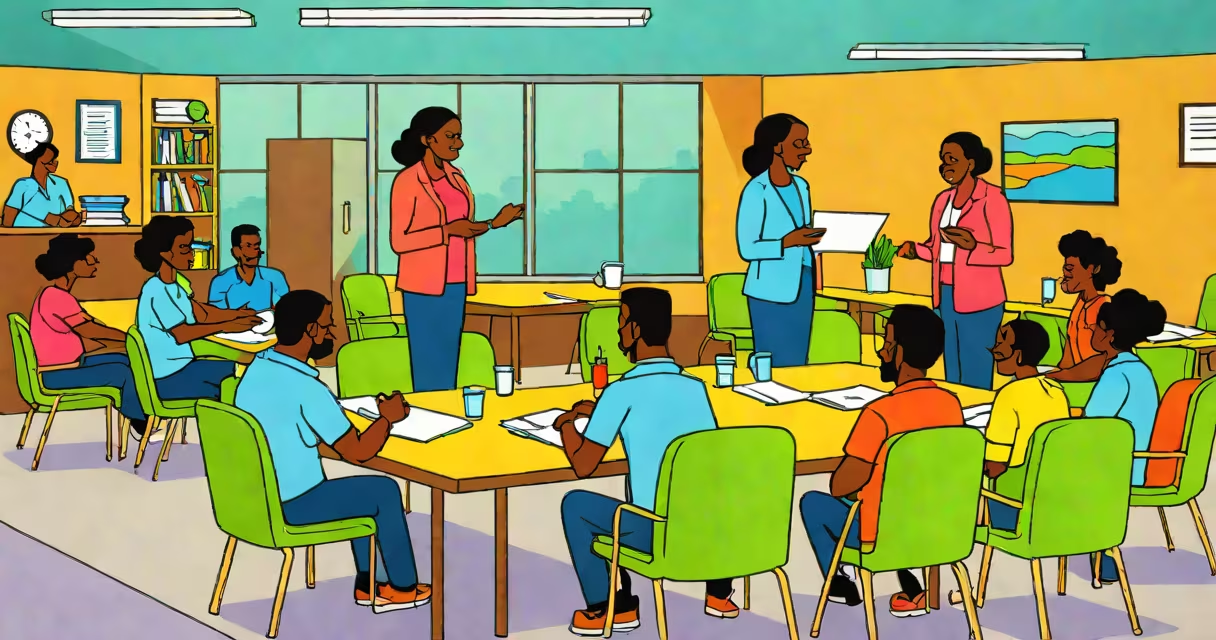
Social work is a professional practice that promotes social change, problem-solving in human relationships, and the empowerment of individuals and communities to improve well-being. It addresses challenges such as poverty, mental health, child welfare, and systemic inequity through evidence-based interventions.
The field operates on a foundation of ethical principles, including service, social justice, dignity, and respect for human diversity. Social workers intervene at multiple levels-individual, family, group, organizational, and community-to reduce suffering and strengthen resilience. They assess needs, develop action plans, connect clients with resources, and advocate for policy reforms that improve access to care and opportunity.
According to the National Association of Social Workers (NASW), social work is guided by a commitment to "the well-being of people in their environments." This dual focus on personal agency and structural barriers distinguishes it from counseling or case management alone. A licensed clinical social worker (LCSW), for example, can diagnose mental health conditions and provide therapy, while a macro-level social worker may lead initiatives to reform housing policies affecting homeless populations.
Every intervention begins with assessment. Social workers gather information through interviews, observations, and standardized tools to understand a client's situation. They then apply frameworks like the biopsychosocial model, which considers biological, psychological, and social factors influencing behavior and outcomes.
For example, a teenager struggling with school attendance might be experiencing depression (psychological), living in an unstable household (social), and dealing with chronic illness (biological). A social worker would coordinate care across mental health providers, schools, and family members to address all dimensions simultaneously.
Interventions include crisis intervention, trauma-informed care, family mediation, and community organizing. In a school setting, a social worker might implement a peer mentorship program to reduce bullying. In a hospital, they may help patients go through discharge planning and access home health services. These actions are documented using standardized forms and integrated into multidisciplinary care teams.
Social work spans several domains, each requiring distinct training and certification. The most common categories include clinical, macro, and generalist practice.
| Type | Focus Area | Typical Settings | Required Credentials |
|---|---|---|---|
| Clinical | Diagnosis and treatment of mental health disorders | Private practice, clinics, hospitals | LCSW (after MSW and supervised hours) |
| Macro | Policy development, community organizing, program administration | Government agencies, nonprofits, advocacy groups | MSW or BSW with leadership experience |
| Generalist | Entry-level practice across systems and populations | Child protective services, shelters, schools | BSW or MSW; state licensure required |
Generalist practice is the foundation of most social work education. It emphasizes skills applicable across settings-assessment, communication, ethical decision-making, and cultural humility. The Council on Social Work Education (CSWE) requires all accredited programs to train students in this approach, ensuring consistency in core competencies regardless of specialization.
A non-obvious distinction: generalist social workers do not perform specialized roles like forensic evaluation or substance abuse counseling unless formally trained. Their role is to identify needs and refer clients to appropriate specialists. This prevents overreach and maintains professional boundaries.
Social workers operate in over 100 different sectors. Common workplaces include public child welfare agencies, veterans' hospitals, refugee resettlement centers, and university counseling offices. In each, they serve as connectors between people and systems.
Consider a case in New York City's Department of Social Services. A single mother receiving food stamps and Medicaid was referred to a social worker after her child was flagged for developmental delays. The worker coordinated evaluations, secured early intervention services, and connected the family with a local parenting class. Over six months, the child showed improved speech milestones, and the mother gained confidence in advocating for her child's needs.
This outcome reflects the impact of coordinated, strengths-based support. Rather than focusing solely on deficits, social workers build on existing assets-family networks, cultural traditions, and personal resilience. Research from the Journal of Social Work Practice shows that clients who receive such complete care are 40% more likely to maintain stable housing and employment over 12 months compared to those receiving fragmented services.
Many assume social work is synonymous with child protection or welfare fraud investigation. While these are valid roles, they represent only a fraction of the field. Most social workers do not conduct investigations or make legal decisions. Instead, they help access to services and support recovery.
Another myth: social workers are "just therapists." Clinical social workers do provide psychotherapy, but many others focus on policy, research, or administrative roles. A social worker leading a statewide initiative to expand mental health coverage in rural areas may never meet a client face-to-face but still contributes to population-level well-being.
One personal observation: during my internship at a community health center, I witnessed how a single social worker managed 40 active cases across three counties. She used a digital case management system to track appointments, referrals, and follow-ups. Her ability to prioritize based on risk level-such as flagging a domestic violence survivor for immediate outreach-demonstrated how structured workflows enable high-volume, high-quality care.
Social work what is it? It is a changing, evidence-based profession dedicated to advancing equity and human dignity. Its practitioners act as advocates, counselors, organizers, and change agents-working quietly but consistently to improve lives at scale.